

Next week, Ecogee will publish its latest ESG Impact Report. It contains plenty of numbers, including homes improved, pupils reached, hours volunteered and money invested in communities. It also contains one particularly BIG figure: to be revealed!
For Ecogee we exist as a business to provide social value to the communities we work in, that means:
- Helping residents live in warmer, more energy-efficient homes
- Supporting local employment and apprenticeships
- Introducing young people to careers in retrofit and renewables
- Giving colleagues time to volunteer
- Investing in local businesses and SMEs
- Donating materials, labour and professional skills
- Supporting charities and community organisations
- Creating improvements that continue to benefit people after a project finishes
Some of those outcomes are easy to count up, we can record how many hours were volunteered, how many pupils attended an event or how much money was donated. BUT understanding the wider value of those activities requires a more consistent approach. What difference have those hours and chats to pupils made long term to that community? That’s where social value calculations come in.
HACT UK Social Value Calculations
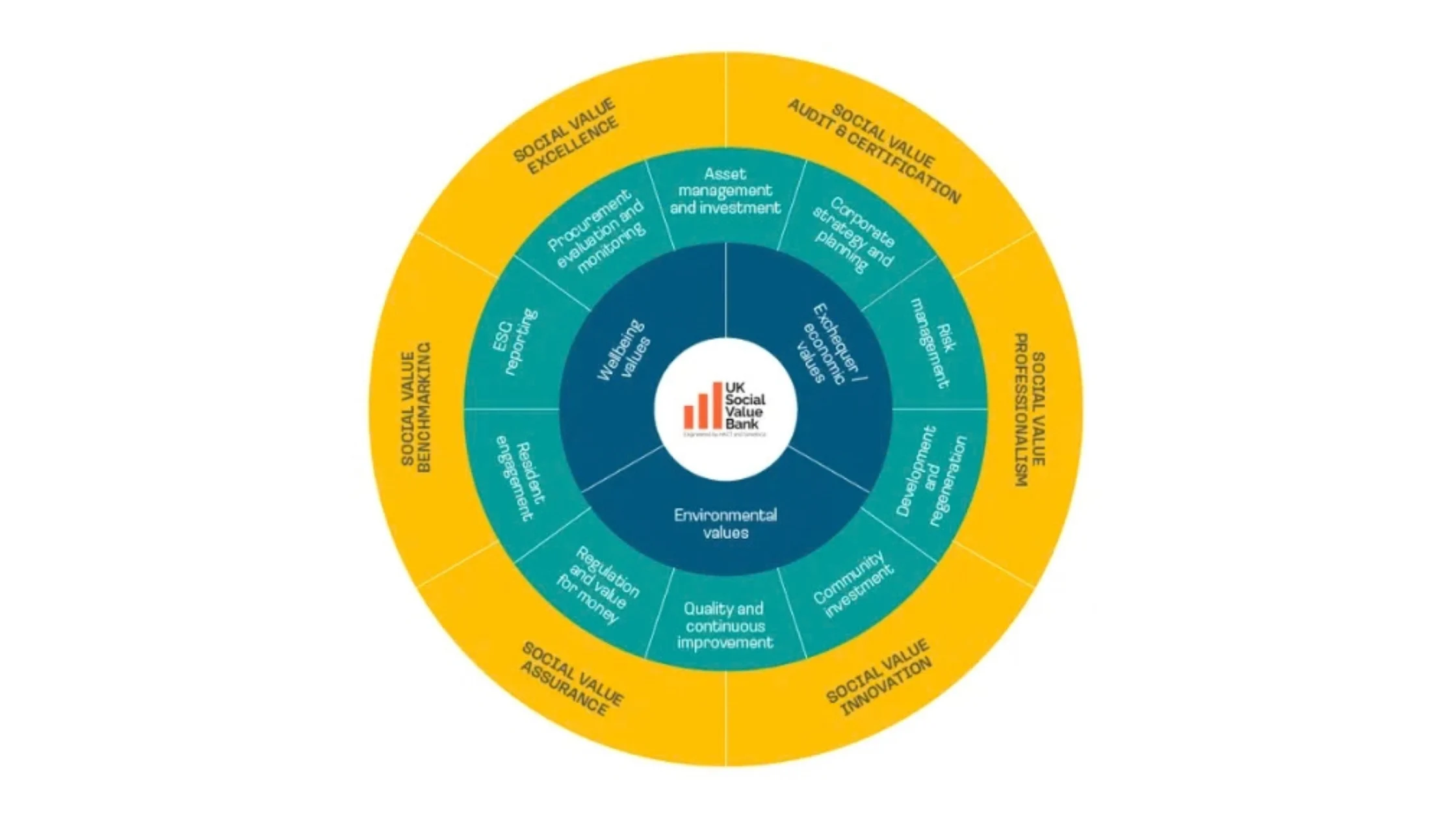
Ecogee uses HACT’s UK Social Value Bank to help measure and report the wider impact created through our work.
The UK Social Value Bank is an evidence-based methodology widely used across the housing sector. It uses national datasets and research into wellbeing to understand how changes in people’s circumstances can affect their quality of life. This allows organisations to apply consistent financial values to different social outcomes. Simply put, it helps us understand the difference between:
“We volunteered for eight hours.”
and:
“What did those eight hours help make possible for the future?”
What does a social value figure include?
Depending on the activity, the calculation could consider outcomes connected to:
- Employment
- Training and qualifications
- Apprenticeships
- Improved health and wellbeing
- Volunteering
- Greater confidence
- Stronger community connections
- Financial security
- Environmental improvements
The methodology focuses on the difference created, rather than simply assigning value to every activity automatically. HACT describes this as measuring impact rather than inputs, using the WELLBY, an HM Treasury-approved measure of wellbeing. This gives Ecogee, our clients and our partners a consistent way to understand and compare activity across different projects.
One community project might show up in a report as donated labour, materials and volunteer time and in real life, it means a community centre finally has the storage it needs to support more local families, or donation and refurbishment project could be recorded as a financial contribution and professional labour.
Ecogee is not a conventional profit driven contractor. We deliver retrofit and renewable-energy projects, but all our profits are reinvested into regenerating places and creating social value.
Ecogee ESG Impact Report
People
- How we support colleagues, apprentices, future talent and careers in the green economy.
Place
- How our work improves homes, responds to community needs and creates benefits beyond the completion of a project.
Planet
- How we help reduce the environmental impact of homes while taking responsibility for our own emissions, travel, fleet and waste.
Procurement
- How our purchasing decisions support SMEs, regional businesses, employment and more resilient local supply chains.
Read more about Ecogee’s approach to social value: https://ecogee.co.uk/how-we-measure-social-value/